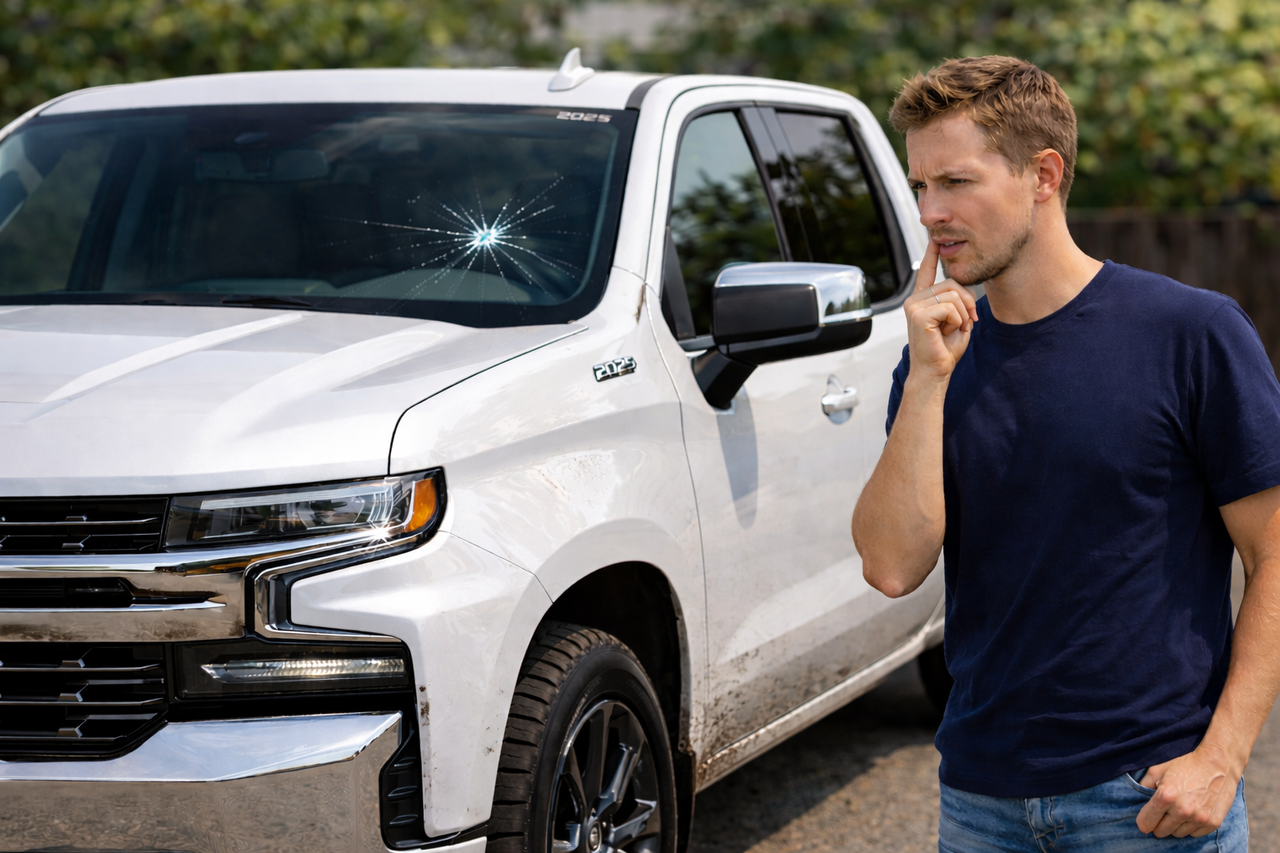
If you drive around Asheville long enough, you will collect a rock chip the size of a blueberry at precisely the worst time. The Blue Ridge views do not help when a light scatters across a crack and your lane departure camera loses its mind. That is where windshield replacement meets something far more technical than most folks expect: Advanced Driver Assist Systems calibration. If your vehicle has a camera behind the glass or radar mounted near it, a simple pane swap is no longer simple. It is glass, sensors, software, tolerances within millimeters, and the difference between your vehicle braking for you at 35 mph on Merrimon Avenue or politely pretending it did not see a thing.
I have spent a lot of years with urethane on my hands, suction cups on my shoulders, and ADAS targets filling my shop floor. The short version is this: the glass you choose and the calibration you approve are safety decisions, not cosmetics. The longer version, the one that keeps drivers in 28802 and the nearby 28801, 28803, 28804, 28805, and 28806 zip codes both safe and sane, takes a few pages. Pull up a chair.
Why windshields became safety components, not just viewfinders
The windshield used to be a quiet passenger. Keep it clean, prevent leaks, and call it a day. Then the auto industry tucked cameras, lidar housings, and rain sensors into the top edge of the glass. Today, many SUVs and sedans rely on that camera to read lane lines, measure following distance, and trigger automatic emergency braking. If that camera is even a couple degrees off because the replacement glass sits a bit low or the bracket alignment changed, the software compensates badly. You still get beeps, but the car misjudges space, which is worse than no beeps at all.
That is why the specifications around the glass changed. OEM and quality aftermarket windshields now back glass replacement asheville 28816 include frit bands, specific mounting pads, and sometimes optical coatings that the camera expects. On certain models, tint shade variation can shift the camera’s exposure, and a cheap bracket can tilt the unit a hair. There is a reason professional installers in Asheville pair windshield replacement with windshield calibration in 28802 and the surrounding areas. One without the other is like replacing hiking boots and forgetting the laces.
The anatomy of a proper windshield replacement for ADAS-equipped vehicles
A clean install begins with prep, not pry bars. We check the build date, the VIN options, and the ADAS suite your vehicle carries. That tells us which glass variants fit: rain sensor, heated wiper park, acoustic laminate, HUD reflective layer, camera bracket geometry. Sometimes five distinct SKUs exist for the same model year. If you tell me you want OEM glass in 28802, I will nod, then ask about your insurer’s policy and your tolerance for backorder timelines. If you ask for aftermarket, I will bring up the brands that respect camera angle specs and avoid the ones that treat them like suggestions.
Once the right glass is in the rack, we dry-fit. We confirm the camera bracket has no flash, no skew, and no play. We lay a tape measure across the pinch weld to make sure the old urethane bead trimmed to a near-uniform height, because this bead is the bed the glass sleeps on. A tall ridge near the A-pillar can lift the corner just enough to twist the camera. That twist turns into a lane-keep assist that favors drifting toward the Grove Arcade instead of away from it.
We prime properly, not hurriedly. Urethane requires surface energy to bond. Inside 28802 during winter mornings, you either warm the glass and the body opening or you accept a longer safe drive-away time. I will take the heat lamp every time. We set with equal downward pressure, peg our alignment blocks, then seat the top edge and confirm the rain sensor sits flush without bubbles.
Only after that do we talk calibration.
Static vs dynamic calibration in practice
Calibration comes in two main flavors. Static calibration uses printed targets placed in specific positions around the vehicle on a controlled floor with measured lighting. Dynamic calibration uses the world as your test track, typically requiring a set speed range and certain lane markers for the camera to recalibrate while you drive.
In Asheville, dynamic calibrations can get fussy. Traffic around I‑240 creates speed oscillations, and faded lane lines after a rainy week throw off pattern recognition. Static setups give us control. We mark centerline, wheelbase, and camera height, then place targets at distances that look excessive until you realize the camera is seeing a scaled world through a narrow focal length. Some cars want one target directly ahead at 4 meters. Others want a grid plus two offset boards at 6 meters. If you mix up units or miss a millimeter requirement on centerline, the ECU will fail the procedure and send you back to square one. Static takes 30 to 60 minutes if the vehicle is cooperative. Dynamic can take 20 to 45 minutes, plus road time and a willingness to loop Riverside Drive until the status flips to complete.
For radar units behind the bumper, we often do additional alignment, since a minor parking lot nudge can skew those modules. Windshield work triggers the forward camera routine. If the vehicle uses both camera and radar for adaptive cruise, we verify they agree. If they argue, you will feel lurching on descents toward Biltmore Village.
When calibration is mandatory and when it is smart
If your vehicle manufacturer says calibrate after glass replacement, treat that like the torque spec on lug nuts. Skipping it to save time invites liability and risk. We see this on mid‑2010s models onward from Toyota, Honda, Subaru, Ford, Hyundai, Volkswagen, and many luxury marques. Even base trims started to include collision mitigation and lane departure cameras. Most modern service procedures flag any windshield removal as a calibration event.
Sometimes the camera retains calibration after a small chip repair. In those cases, we still scan the system. If post‑scan shows no diagnostic trouble codes and a quick road verification holds, no formal calibration is required. Replace the glass, though, and the rules change. The camera lost its reference. That reference resets with calibration.
The OEM glass vs aftermarket glass question, without the drama
I have installed thousands of panes, including OEM glass in Asheville 28801 and 28802, and premium aftermarket in 28803, 28804, and 28805. The honest truth: good aftermarket glass can calibrate cleanly and perform to spec. The catch is the word good. Do not chase the cheapest option. You want consistent bracket welds, correct frit patterns, and optical clarity without waves that would distort lane lines. When aftermarket vendors hit those marks, the calibration results mirror OEM. When they do not, we fight focus values and end up swapping glass anyway.
HUD windshields, especially on European brands, often behave better with OEM. The reflective PVB layer for head‑up displays can be finicky. If you love your HUD projection crispness, say so up front. Many insurers will approve OEM if we document the requirement, particularly with ADAS and HUD combined.
Insurance, deductibles, and the calibration line item
Insurers learned the hard way that a windshield claim can include more than glass and glue. Many policies in the Asheville area now recognize ADAS calibration explicitly. If your policy covers comprehensive with glass, the deductible and coverage rules apply to the whole job, not half of it. Still, you want to confirm whether your carrier pays for static calibration in‑house, mobile dynamic calibration, or both. I have seen policies that allow mobile windshield replacement in 28802 but require in‑shop calibration because of floor and lighting controls. Reasonable. Safer too.
If you drive a fleet vehicle, the conversation changes slightly. Fleet managers in 28816 and 28806 often prioritize uptime, so we plan same‑day auto glass in 28802 with pre‑scheduled calibration windows. A fleet Suburban with a broken windshield on Brevard Road cannot sit for days waiting on a backordered bracket. We keep common panes and brackets in stock and we coordinate with insurance adjusters quickly to prevent a game of phone tag.
What happens if you skip calibration
The car still starts. The dash may even look normal for a few miles. Then the forward collision indicator flickers, or the adaptive cruise disengages with a chime at 42 mph. If that sounds annoying, the safety risk runs deeper. A misaligned system may brake late, misread a curve as a lane departure, or fail to detect a pedestrian until it is too late. It is not melodrama to say the right calibration has real consequences on Merrimon at dusk when glare meets an unexpected cyclist.
Technically, you can disable ADAS features, but then you traded modern safety for 1998 driving. Insurance companies will not smile at that choice after a crash. Neither will an attorney. Consider calibration part of the replacement, not an add‑on.
A morning in the shop: an Asheville 28802 case
A 2021 Subaru Outback rolled in with a clean star break that spidered across the driver’s sweep in one cold snap. Outbacks rely on stereo cameras at the windshield top. We sourced the correct glass with the bracket set, verified the VIN options, and had it installed in about 90 minutes, including a warm cure. Static calibration took 35 minutes. The left camera accepted on the first pass. The right camera wanted a 2 millimeter target shift. Subaru’s software is picky and helpful, which I appreciate. After the cameras passed, we checked radar values, then did a quick dynamic drive toward the River Arts District to confirm lane centering felt natural. Total time for the customer, including coffee and paperwork: three hours and change. No warning lights, no false braking on the way home.
Next bay over, a 2018 F‑150 needed a camera relearn after glass. Ford specifies dynamic calibration. It wanted 15 to 30 minutes of steady speed with clear lane lines. Asheville traffic gave us a workout. We took the long way through 28804, looped back through 28801, found a quiet stretch, and it finally completed. Plan for that variability if your vehicle prefers dynamic calibrations. Some days the city plays nice. Others, not so much.
Mobile service and when the shop is better
Mobile auto glass in Asheville 28802 is handy. We do plenty of driveway replacements from 28801 to 28805. For ADAS, a shop setting often wins. You get level floors, controlled light, measured spaces, and all the targets. If we know your vehicle accepts dynamic calibration, mobile can still work, but give us room and time. Also, wind gusts in 28804 can kick up dust, and dust is the glitter of the auto glass world. It sticks. It shows. It causes leaks. A garage bay makes life simpler.
If your schedule is tight and you want mobile windshield replacement in Asheville 28802 with calibration the same day, we can split the job: mobile install at your office, followed by an in‑shop static calibration after lunch. That keeps your day moving without skipping the critical step.
A brief map of terms that confuse people
Windshield calibration is the everyday phrase. ADAS calibration is the umbrella. Auto glass calibration sits somewhere in between. All three point to the same practice: teaching the car where straight ahead really is after you disturbed its view. Different manufacturers label component routines differently. Honda loves abbreviations. Toyota writes novels. Ford asks for a loop around the block like a dog ready for a walk. The gist stays the same.
How long, how much, and what can go sideways
Most windshield replacements with ADAS calibration take between two and four hours end to end, assuming parts are on hand and software behaves. Pricing varies with glass type and calibration method. OEM glass tends to run higher. Static calibration adds equipment and time, dynamic adds road time. If a camera fails to calibrate, common causes include incorrect glass variant, misseated bracket, poor view due to tint shade, or environmental misses like target glare. Fixes range from simple re‑aiming of targets to glass swap. It is rare, but it happens. Honest shops explain that up front.
An edge case worth mentioning: aftermarket bumpers and lift kits. If your SUV gained height or an aggressive aftermarket bumper blocked radar, the camera can calibrate fine but your adaptive cruise or blind spot radar goes out of spec. That is not the glass, that is geometry. We will warn you and suggest a qualified alignment and radar re‑aim.
A quick, honest checklist for Asheville drivers
- Ask whether your vehicle requires ADAS calibration after glass replacement and which method it needs. Confirm the glass part number matches your VIN options, especially if you have HUD, rain sensors, or camera brackets. If you choose aftermarket, ask your installer which brands calibrate reliably on your model. Plan your day to include calibration, not just the install. Coffee helps. Keep your windshield clean after replacement, and avoid slamming doors until the urethane cures fully.
Local quirks that shape good installs in 28802
Asheville’s weather swings matter. Cold mornings in 28816 call for longer safe drive‑away times and patient curing. Summer glare across 28805 can wash out lane markers, so we prefer early or late routes for dynamic calibrations. Construction zones in 28803 replace lane lines with artistic suggestions, and cameras do not love creativity. If you are traveling through 28810 or 28813 for calibration, we often schedule outside rush windows. It pays off in fewer restarts.
When glass is on national backorder, we lean on relationships. We check warehouses across 28804 and 28806, then nudge a supplier or two who owes us a favor. If you call with a broken windshield in Asheville 28802 after a tree limb auditioned for a circus act, we can often deliver same‑day auto glass in 28802 and next‑day calibration. Emergency auto glass in 28802 exists for a reason.
A word on repairs vs replacement
If the crack is under six inches and not in the camera sweep, rock chip repair in Asheville 28802 can be a smart move. We stabilize it, reduce the scar, and keep the factory seal intact. Once a crack crosses the driver’s view or enters the stereoscopic camera zone, replacement becomes the safer play. The optics need clarity. Chip resin does not provide that in the camera’s field. That is why windshield chip repair in 28802 earns a yes one day, and a glass swap the next.
Fleet, trucks, and the big glass question
Truck windshield replacement in Asheville 28802 looks straightforward until you meet a tractor unit with a radar pod tucked behind a badge or a modern pickup with a deeply curved upper frit line. On fleet vehicles, we map calibration requirements to vehicle use. A delivery van stuck in 28806 traffic cannot lose an afternoon to a fickle dynamic procedure, so we book static in the early morning and keep operations moving. If your fleet spans 28801 through 28816, we keep records by VIN so glass variants do not become an Easter egg hunt.
How to pick an installer who will not make you babysit the process
The right technician does not wave away calibration questions. They scan the vehicle before and after, explain static versus dynamic in normal language, and tell you what can delay success. They have targets that do not look like someone printed them at home, and they can show alignment references on the floor. Their urethane brand is not a secret. They respect safe drive‑away times. If the first thing you hear is a price and not a plan, consider shopping around.
Folks email me with keyword‑loaded requests like auto glass Asheville 28802, 28802 auto glass Asheville, or even OEM glass Asheville 28802. I translate the jargon into a parts order, a schedule, and a clear outcome. Whether you are in 28801 or 28805, the core remains: put the right glass in properly, then teach the car how to see again.
Where the rubber meets the lane line
Windshields are now lenses. Treat them that way. A clean install and a correct calibration make your driver assistance systems feel natural, almost invisible. That is the goal. The car should nudge you once in a while, never nag, and especially never surprise you with a late brake or an early swerve. In and around Asheville 28802, with our mix of mountain light, leaf season traffic, and construction detours, a little precision goes a long way.
If you are staring at a crack right now, you have options that do not require a headache. Ask the questions that matter: part number, calibration plan, timeline, warranty. If the shop can answer those without a pause, you are on the right track. If they are comfortable with ADAS calibration in Asheville 28802, 28804, and 28806, even better. Your car will thank you the next time someone taps their brakes on I‑26 for no apparent reason and your system decides to help.
And if you still think a windshield is just a sheet of glass, come by when we set up targets across the shop. You will see a parking bay transform into a science lab. It is equal parts carpentry, optics, and patience. Then you slide back behind the wheel, the chimes are quiet, and the camera knows the road again. That is the moment every good installer aims for.